
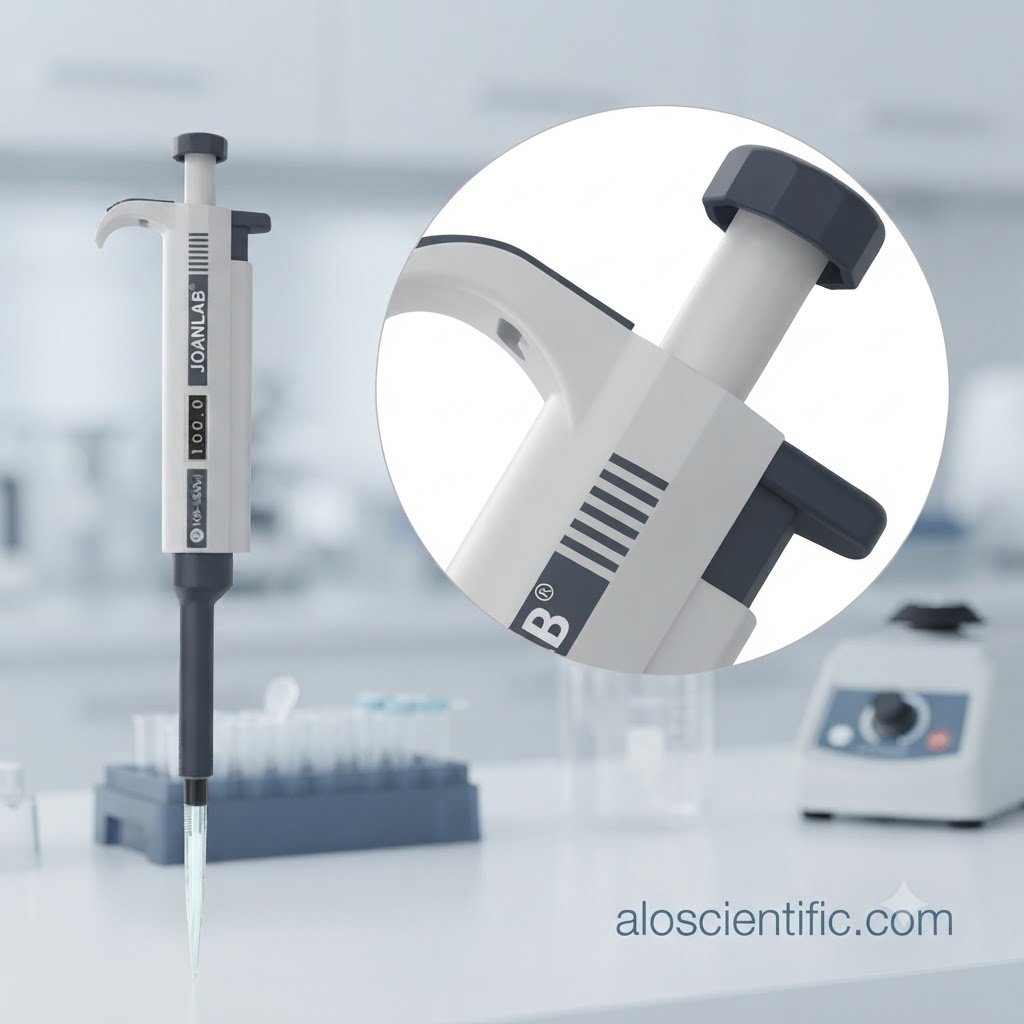
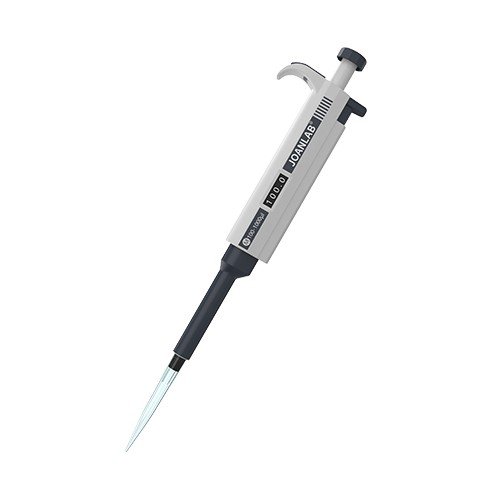
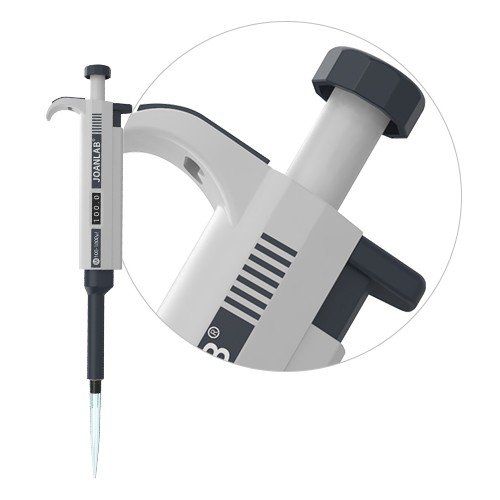
Micro Pipette Joanlab Adjustable Volume
Introduction / ভূমিকা
Laboratory procedures rely heavily on accuracy, especially when dealing with micro-liter volumes of reagents, chemicals, or biological samples. The Micro Pipette Joanlab provides scientists and researchers with the precise control they need. ল্যাবরেটরির গবেষণায় সঠিক পরিমাপের বিকল্প নেই, আর এই কাজে Joanlab পাইপেট অত্যন্ত নির্ভরযোগ্য একটি নাম।
Key Features & Specifications / প্রধান বৈশিষ্ট্যসমূহ
-
Ergonomic Design: Lightweight body and comfortable finger hook design reduce hand fatigue during repetitive pipetting tasks.
-
Digital Volume Indicator: Clear numerical window ensures quick and error-free volume setting.
-
Smooth Operation: Low plunger forces make aspiration and dispensing seamless, minimizing strain.
-
Tip Ejector: Built-in tip ejector allows safe and convenient disposal of used tips without manual contact.
-
Autoclavable Components: Lower shaft sections can often be autoclaved, ensuring complete sterility for sensitive biological workflows.
Why Choose Micro Pipette Joanlab? / কেন এটি ব্যবহার করবেন? Micro Pipette Joanlab
এই পাইপেটটি তার উচ্চ কার্যকারিতা এবং দীর্ঘস্থায়ী স্থায়িত্বের (durability) জন্য পরিচিত। বায়োটেকনোলজি ল্যাব, মেডিকেল ডায়াগনস্টিক সেন্টার, এবং শিক্ষা প্রতিষ্ঠানের কেমিস্ট্রি ল্যাবে এর ব্যাপক ব্যবহার রয়েছে। এর ক্যালিপ্রেশন দীর্ঘ সময় ধরে নিখুঁত থাকে, যা প্রতিবার সঠিক ফলাফল নিশ্চিত করে।
Proper Handling and Maintenance / সঠিক ব্যবহার ও রক্ষণাবেক্ষণ
-
Always set the volume within the specified operating range of the particular pipette model.
-
Avoid turning the volume adjustment knob past its maximum or minimum limits.
-
Always use matching, high-quality pipette tips to ensure a tight, air-sealed fit.
-
Store the pipette upright on a dedicated stand when not in use.
Conclusion / উপসংহার Micro Pipette Joanlab
সার্বিকভাবে, আপনার ল্যাবরেটরি বা রিসার্চ ওয়ার্ককে আরও সহজ এবং নির্ভুল করতে Micro Pipette Joanlab একটি দারুণ বিনিয়োগ। ল্যাবরেটরির কাজের মান বাড়িয়ে সঠিক ফলাফল পেতে আজই বেছে নিন এই বিশ্বস্ত লিকুইড হ্যান্ডলিং টুলটি।
Advanced Technical Specifications & Operational Guidelines / উন্নত প্রযুক্তিগত বৈশিষ্ট্য ও পরিচালনা নির্দেশিকা
The Micro Pipette Joanlab is engineered to meet the stringent demands of modern molecular biology, clinical diagnostics, biochemistry, and general research laboratories. Below is an expanded technical overview detailing its calibration mechanics, handling best practices, and sterilization protocols.
Calibration and Precision Mechanics / ক্যালিপ্রেশন এবং নিখুঁত কার্যপদ্ধতি Micro Pipette Joanlab
-
Piston and Seal Integrity: Joanlab pipettes utilize high-precision micro-pave pistons and specialized PTFE/silicone sealing rings that ensure airtight vacuum generation. This prevents air leakage during aspiration, which is critical when handling volatile or viscous reagents.
-
Factory Calibration: Each unit undergoes rigorous individual testing and calibration in compliance with ISO standards. This guarantees that delivered volumes strictly align with nominal values.
-
Field Recalibration: Many models include a calibration tool and an external adjustment mechanism, allowing laboratory technicians to perform routine periodic recalibration if environmental factors or heavy usage introduce minor volume deviations.
Sterilization and Autoclaving Protocols / স্টেরিলাইজেশন এবং অটোক্লেভিং প্রোটোকল Micro Pipette Joanlab
-
Partial Autoclavability: To prevent cross-contamination in sensitive DNA/RNA assays or microbiological cultures, the lower tip cone assembly of the pipette can typically be detached and autoclaved at 121°C (15 psi) for 20 minutes.
-
Chemical Decontamination: The outer body and upper housing are resistant to common laboratory disinfectants such as 70% ethanol, isopropanol, and mild bleach solutions, making surface wipe-downs safe and effective.
Best Practices for Error-Free Pipetting / ত্রুটিমুক্ত পাইপেটিংয়ের কিছু গুরুত্বপূর্ণ টিপস
-
Immersion Depth: Immerse the pipette tip to the correct shallow depth (1–3 mm for micro-volumes) straight down into the liquid to avoid external droplet adherence.
-
Aspiration Angle: Always hold the pipette vertically or at a slight angle not exceeding 20 degrees from the vertical plane during liquid intake.
-
Pre-rinsing: For high-precision work, aspirate and dispense the liquid back into the source vessel 2 to 3 times with the same tip to saturate the dead air space with vapor pressure, minimizing sample loss.
-
Plunger Control: Never release the plunger abruptly. Always allow it to return smoothly to the top position to ensure uniform sample intake and avoid bubble formation.
- Micro Pipette Joanlab Adjustable Volume
Comprehensive Technical Manual & Workflow Guide / বিস্তারিত প্রযুক্তিগত নির্দেশিকা এবং কর্মপ্রবাহ নির্দেশিকা
To maximize the lifespan, accuracy, and efficiency of your Micro Pipette Joanlab, understanding its internal structure, selection criteria, advanced operational workflows, and troubleshooting methods is essential. Below is an expanded technical manual designed for laboratory managers, researchers, and science students.
1. Anatomy and Functional Components / অ্যানাটমি এবং কার্যকরী অংশসমূহ
-
Plunger Button (প্লাঞ্জার বাটন): Located at the very top, it controls both the liquid aspiration and the blowout/dispense steps through a two-stop mechanism.
-
Volume Adjustment Knob (ভলিউম অ্যাডজাস্টমেন্ট নব): Turned to set the desired microliter volume, connected to an internal micro-meter screw.
-
Tip Ejector Arm (টিপ ইজেক্টর আর্ম): A mechanical rod running alongside the shaft that pushes used plastic tips off the cone cleanly without hand contact, minimizing biological contamination risks.
-
Shaft and Tip Cone (শ্যাফট এবং টিপ কোন): The lower extension where disposable polymer tips attach. This part requires an airtight seal to ensure accurate liquid suction.
2. Detailed Two-Stop Pipetting Technique / টু-স্টপ পাইপেটিং টেকনিকের বিস্তারিত ধাপ Micro Pipette Joanlab
Achieving high accuracy with single-channel adjustable micro pipettes requires mastering the two-stop technique:
-
First Stop (First Resistance Point): Press the plunger smoothly down to the first natural resistance point. This defines the volume of air to be expelled.
-
Aspirating Liquid: Immerse the tip vertically into the liquid (1–3 mm deep) and release the plunger in a slow, controlled, and uniform manner. Never snap the plunger back.
-
Dispensing to the First Stop: Place the tip against the interior wall of the receiving vessel at a 10–30 degree angle. Press the plunger down smoothly only to the first stop. Pause for 1–2 seconds to ensure complete liquid delivery.
-
Blowout (Second Stop): Press the plunger past the first stop all the way down to the second stop to expel any residual droplets remaining in the tip.
3. Selection Guide Based on Volume Ranges / ভলিউম রেঞ্জ অনুযায়ী সঠিক পাইপেট নির্বাচন Micro Pipette Joanlab
Joanlab pipettes are typically available in various adjustable volume ranges. Choosing the right variant for your specific assay is crucial:
-
0.1–2.5 µL or 0.5–10 µL: Ideal for molecular biology, PCR setups, DNA amplification, and enzyme assays.
-
2–20 µL / 10–100 µL: Frequently used in general biochemistry, clinical chemistry, and ELISA testing.
-
100–1000 µL (1 mL): Suitable for larger reagent transfers, buffer preparation, and cell culture media handling.
4. Comprehensive Troubleshooting Guide / সমস্যা সমাধান নির্দেশিকা (ট্রাবলশুটিং) Micro Pipette Joanlab
-
Problem: Bubbles appearing during liquid aspiration.
-
Cause: Tip is not securely attached, or the tip is immersed too deep or too shallow.
-
Solution: Firmly press a new matching tip onto the cone and check the immersion depth (1 to 3 millimeters).
-
-
Problem: Inaccurate volume delivery or leaking.
-
Cause: Worn-out O-rings, internal piston contamination, or chemical residue buildup.
-
Solution: Clean the lower shaft, inspect the sealing rings, and perform recalibration using standard analytical balance mass-checking methods.
-
-
Problem: Stiff or sticking plunger movement.
-
Cause: Dried chemical residue or lack of proper piston lubrication.
-
Solution: Disassemble the lower component carefully, clean with authorized laboratory solutions, and apply designated silicone grease to the piston.
-
Reviews
There are no reviews yet.