
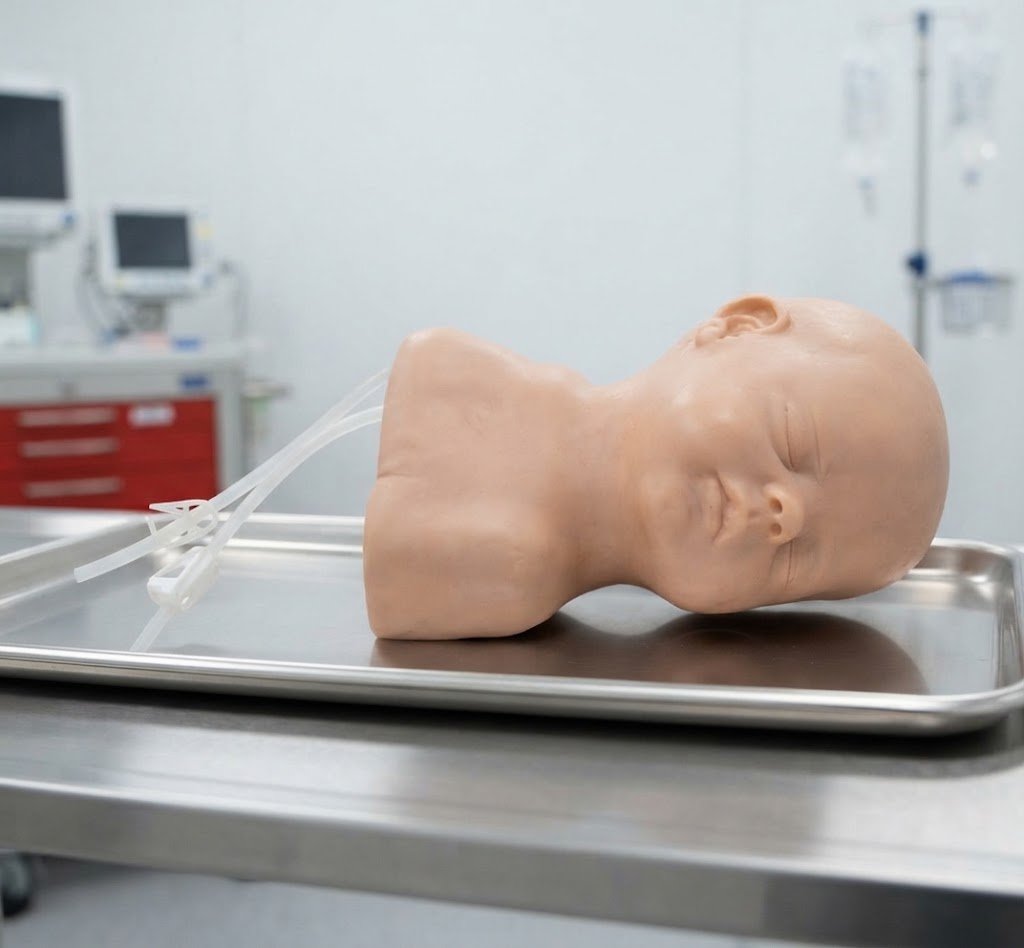
XC-409E Neonate Scalp Venipuncture Model for Practical Training
The XC-409E Neonate Scalp Venipuncture Model is designed to support educational activities related to neonatal venipuncture and vascular access. It provides an infant-focused training platform for students who need to understand the principles of scalp vein access and associated nursing procedures.
Scalp venipuncture may be discussed in neonatal and paediatric nursing when peripheral vascular access is required and appropriate clinical assessment has been completed. Because neonatal patients are small and clinically sensitive, healthcare professionals need specialised knowledge, careful handling and adherence to institutional protocols. Simulation training allows learners to study these concepts without practising on a real newborn during the initial learning stages.
Neonatal Venipuncture Training Neonate Scalp Venipuncture Model
The Neonatal Venipuncture Training Model can be used during classroom demonstrations and practical nursing sessions. Instructors can explain the purpose of venipuncture, preparation, infection-control principles, equipment handling, observation and post-procedure care.
Students can become familiar with the terminology and sequence associated with neonatal venipuncture. This can make theoretical topics easier to understand and can support a more structured transition from classroom learning to clinical education.
Scalp Vein Access Education
The scalp can be an important area of study in neonatal vascular access. A specialised simulation model helps teachers explain the general concept of identifying suitable access sites and approaching procedures with appropriate care.
Through the Neonate Scalp Venipuncture Model, instructors can discuss important learning points such as patient positioning, maintaining cleanliness, preparing equipment, observing the site and recognising the importance of safe clinical practice.
The model should always be used according to the manufacturer’s intended function and the healthcare institution’s approved training guidelines.
Infant IV Training
The XC-409E can also support broader neonate IV training concepts. Nursing students can learn about the responsibilities involved in preparing for vascular access and understand how neonatal patients require careful monitoring.
In a practical class, the instructor may demonstrate the preparation stage, explain the required equipment and discuss the principles of maintaining an appropriate clinical environment. This makes the session more interactive and helps students connect theoretical knowledge with practical nursing skills.
Nursing Skills Laboratory Application
A nursing skills laboratory provides a safe environment for students to learn before participating in patient care. The Neonatal Nursing Training Model can be included in a wide range of educational activities, from introductory demonstrations to structured skill assessments.
Students can use the model under supervision to develop familiarity with neonatal care equipment and clinical procedures. Teachers can also use the model for questions, demonstrations, OSCE-style learning activities and practical revision sessions where appropriate.
Suitable for Medical Colleges and Nursing Institutes
The XC-409E is relevant to educational organisations that provide:
- Diploma nursing education
- BSc nursing education
- Paediatric nursing training
- Neonatal nursing education
- Medical student clinical skills training
- Nursing skills laboratory practice
- Healthcare simulation training
For Bangladesh-based institutions, this type of equipment can be useful for practical classes where students need to understand specialised neonatal procedures in a controlled environment.
12. Key Features
- Neonate-focused training design for specialised neonatal nursing education.
- Scalp venipuncture practice concept for teaching infant vascular access principles.
- Suitable for supervised classroom demonstration and simulation-based learning.
- Supports neonatal IV and venipuncture education.
- Useful for nursing students and healthcare trainees.
- Appropriate for medical colleges, nursing colleges and simulation laboratories.
- Helps combine theoretical lessons with practical demonstration.
- Supports discussion of infection prevention, preparation and patient observation.
Specific functional features, dimensions, materials and supplied accessories should be confirmed with the supplier before purchase.
13. Educational Applications
Neonatal Nursing Training
The model can be used to introduce students to neonatal venipuncture concepts and the responsibilities associated with infant vascular access.
Paediatric Nursing Education
Teachers can incorporate the model into paediatric nursing classes to explain the differences in handling and care considerations for infants.
IV Access Demonstration
The model can support instructor-led education about IV access preparation, equipment awareness and general nursing procedures.
Simulation Laboratory Practice
The XC-409E can be included in clinical simulation activities where students learn through supervised demonstrations and structured practice.
Assessment and Skill Development
Institutions may incorporate the model into practical classes, demonstrations and skills assessments according to their own academic curriculum.
14. Benefits of Neonate Scalp Venipuncture Model
Better Practical Understanding
A simulation model provides a more visual approach to learning than theory alone. Students can better understand the procedure when an instructor demonstrates it using a physical training model.
Controlled Learning Environment
Students can become familiar with neonatal venipuncture concepts before participating in supervised real-patient clinical training.
Improved Equipment Familiarity
Practical sessions help students understand the role of commonly used clinical equipment and the importance of organised preparation.
Supports Instructor Demonstration
Teachers can demonstrate each stage of a training procedure and explain important safety considerations while students observe.
Useful for Repeated Training
Simulation-based education allows institutions to repeat demonstrations for different batches of students without depending on live patients for introductory practice.
Stronger Clinical Preparation
Training on a neonatal model can help students become more comfortable with specialised neonatal care concepts before entering clinical settings.
15. Specifications Neonate Scalp Venipuncture Model
| Specification | Details |
|---|---|
| Product Name | Neonate Scalp Venipuncture Model |
| Model Number | XC-409E |
| Product Category | Medical Education & Nursing Training Model |
| Model Type | Neonatal Clinical Skills Simulator |
| Primary Training | Scalp Venipuncture |
| Secondary Training | Neonatal IV and Vascular Access Education |
| Main Users | Nursing Students, Medical Students, Clinical Trainers |
| Suitable For | Medical Colleges, Nursing Institutes, Simulation Labs |
| Training Method | Demonstration and Supervised Simulation |
| Application | Neonatal Nursing and Clinical Skills Training |
| Material | Confirm with supplier |
| Dimensions | Confirm with supplier |
| Weight | Confirm with supplier |
| Accessories | Confirm with supplier |
| Brand / Supplier | Alo Scientific |
| Availability | Contact Alo Scientific |
16. Why Use an Infant Scalp Venipuncture Simulator?
Neonatal procedures require specialised knowledge and careful technique. For this reason, students need opportunities to learn the principles of clinical procedures in a safe educational environment.
The Infant Scalp Vein Injection Simulator concept is valuable because it allows students to understand neonatal vascular access as part of their nursing curriculum. Teachers can explain anatomy-related considerations, procedural preparation, infection prevention and observation without using a live infant during basic introductory practice.
Simulation-based training also encourages students to ask questions and repeat learning activities under supervision. This can make practical lessons more engaging and structured.
17. Who Can Use This Model? Neonate Scalp Venipuncture Model
The XC-409E can be considered for:
- Nursing students
- Medical students
- Paediatric nursing students
- Neonatal care trainees
- Nursing educators
- Clinical instructors
- Medical simulation trainers
- Healthcare skills development centres
It can be used as part of both theoretical and practical training programmes depending on institutional requirements.
18. Why Buy XC-409E from Alo Scientific? Neonate Scalp Venipuncture Model
Alo Scientific supplies scientific equipment, medical training models, anatomy models, laboratory products and healthcare education equipment for institutions in Bangladesh.
The XC-409E Neonate Scalp Venipuncture Model is a specialised product for institutions that require neonatal clinical simulation equipment. Before purchasing, institutions can contact Alo Scientific to confirm the current product configuration, technical specifications, availability, pricing and delivery information.
For medical colleges, nursing colleges, hospitals and training centres, selecting an appropriate educational model can help create a more practical learning environment for students.
19. Frequently Asked Questions
Q1. What is the XC-409E Neonate Scalp Venipuncture Model?
The XC-409E is a neonatal medical training model designed to support education and demonstration related to scalp venipuncture and infant vascular access.
Q2. Who should use the Neonate Scalp Venipuncture Model?
It is intended for nursing students, medical students, clinical educators, nursing instructors and healthcare trainees.
Q3. What is the main use of this model?
Its main purpose is to support neonatal scalp venipuncture education, demonstration and supervised clinical skills training.
Q4. Is the XC-409E suitable for nursing colleges?
Yes. It is suitable for nursing education environments where neonatal and paediatric clinical skills are taught.
Q5. Can this model be used for IV training?
The model is intended to support neonatal venipuncture and related vascular access education. Specific IV functions should be confirmed according to the manufacturer’s configuration.
Q6. Is this suitable for neonatal nursing students?
Yes. The infant-focused design makes it relevant to neonatal nursing and paediatric clinical education.
Q7. Can instructors use this model for demonstrations?
Yes. It can be incorporated into instructor-led demonstrations and supervised simulation training, subject to the actual features of the model.
Q8. Where can I buy XC-409E in Bangladesh?
You can contact Alo Scientific through aloscientific.com for product availability, current pricing, technical details and delivery information.
20. Conclusion
The XC-409E Neonate Scalp Venipuncture Model is a specialised training aid for neonatal nursing, paediatric clinical education and venipuncture simulation. It provides a dedicated educational environment for learning about neonatal scalp vascular access, preparation, nursing responsibilities and safe clinical practice.
For medical colleges, nursing institutes, hospitals and simulation laboratories in Bangladesh, this Neonatal Venipuncture Training Model can be a useful addition to practical teaching facilities. It supports the combination of theory and supervised simulation, helping students gain familiarity with specialised neonatal procedures before progressing to real clinical environments.
For current price, availability, specifications and accessories, contact Alo Scientific before placing an order.
Website: aloscientific.com
Introduction
The XC-409E Neonate Scalp Venipuncture Model is a specialised medical training model designed for neonatal nursing education, venipuncture demonstration and practical clinical skills development. Neonatal vascular access can be a challenging topic for healthcare students because newborns have very small and delicate vascular structures. Proper training is therefore important before students move into real clinical environments.
This Neonate Scalp Venipuncture Model provides a controlled educational platform where instructors can introduce the concepts of scalp venipuncture, infant vascular access, injection technique, patient observation and general nursing precautions. Students can learn in a supervised environment and become more familiar with the procedure before clinical practice.
For nursing institutes and medical colleges in Bangladesh, simulation-based training is becoming an important part of practical education. A dedicated neonatal model can help teachers make the learning process more visual, practical and understandable. Instead of depending only on books, diagrams and lectures, students can observe instructor demonstrations and practise relevant skills according to the capabilities of the model.
The XC-409E is particularly suitable for neonatal nursing training, paediatric nursing education and healthcare simulation programmes.


Reviews
There are no reviews yet.