
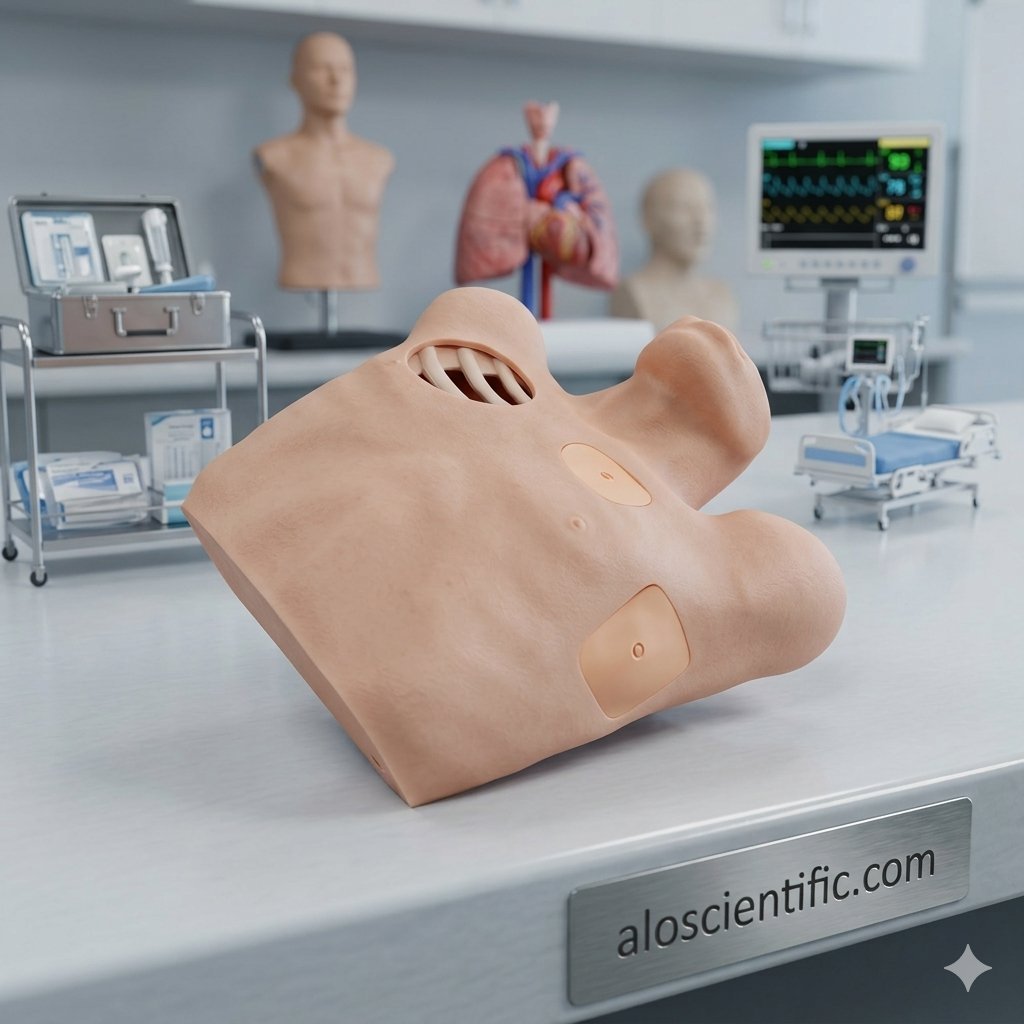
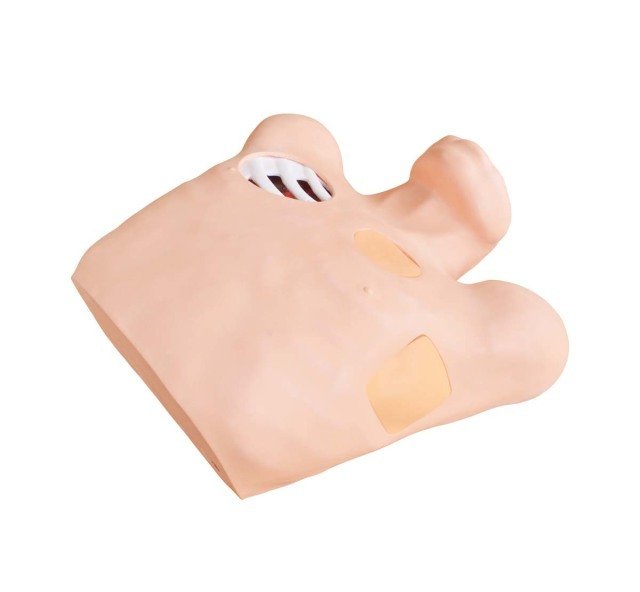
Pneumothorax Pleural Drainage Simulator
The XC-465 Pneumothorax / Pleural Drainage (Artificial Hydrothorax) Simulator is a medical education model intended to support practical training related to pneumothorax, pleural conditions and drainage procedures. Pneumothorax occurs when air enters the pleural space, potentially causing partial or complete lung collapse. Pleural drainage is a clinical procedure used in appropriate situations to remove air or fluid from the pleural cavity.
Understanding thoracic anatomy, pleural conditions and drainage principles is an important part of medical education. Students and healthcare trainees need to learn relevant anatomical concepts, procedural steps, infection prevention and patient safety principles under qualified supervision. A dedicated training simulator can help instructors demonstrate these concepts in a controlled learning environment.
The XC-465 simulator can be considered for use in medical colleges, nursing institutes, clinical skills laboratories, emergency care training centres and simulation-based education facilities. It may support instructor demonstrations and supervised practice for procedures represented by its actual design.
For healthcare education in Bangladesh, practical training equipment can help students connect theoretical knowledge with structured hands-on learning. The XC-465 Pneumothorax / Pleural Drainage Simulator may provide a physical resource for relevant training sessions. Contact Alo Scientific to confirm its precise features, supported procedures, dimensions, materials and included accessories before purchasing.
8. Product Overview Pneumothorax Pleural Drainage Simulator
The XC-465 Pneumothorax / Pleural Drainage (Artificial Hydrothorax) Simulator is intended to provide a practical training aid for teaching selected concepts and techniques associated with pneumothorax and pleural drainage. Pneumothorax Pleural Drainage Simulator
Pneumothorax and pleural effusion are conditions involving the pleural space but have different causes and clinical characteristics. Pneumothorax involves air in the pleural space, while pleural effusion involves excess fluid. Depending on the clinical situation, a healthcare professional may determine that a drainage procedure is required. Training in these procedures requires knowledge of anatomy, patient assessment, sterile technique and procedural safety.
A simulation model may help educators explain the relationship between the chest wall, pleural space and drainage equipment. Depending on its configuration, the XC-465 may be used for demonstrations or supervised procedural practice related to artificial hydrothorax and pleural drainage.
The model can be integrated into skills laboratory lessons, clinical workshops and simulation-based training programs. Students can observe an instructor demonstration, learn the relevant procedural sequence and practise only those activities supported by the trainer.
The exact model functions, replaceable parts, fluid system, puncture sites and compatibility with training instruments must be verified with the manufacturer or supplier. This ensures that training activities are appropriate for the supplied model.
9. Key Features of XC-465 Pneumothorax / Pleural Drainage Simulator Pneumothorax Pleural Drainage Simulator
-
Pneumothorax education: Supports teaching about pneumothorax and related thoracic anatomy.
-
Pleural drainage training: Intended to support education related to pleural drainage procedures, depending on its configuration.
-
Artificial hydrothorax simulation: Provides a training context related to artificial pleural fluid or drainage scenarios, subject to verified product functions.
-
Practical medical education: Can complement lectures, demonstrations and supervised practical sessions.
-
Clinical skills laboratory use: Suitable for consideration in simulation centres and medical skills laboratories.
-
Instructor-guided demonstrations: Allows educators to explain relevant concepts and supported procedures.
-
Simulation-based learning: Provides a physical training resource for applicable chest procedure education.
-
Healthcare training application: May be suitable for relevant medical and nursing education programs.
-
Educational use: Designed for training rather than direct patient diagnosis or treatment.
10. Applications of XC-465 Pneumothorax / Pleural Drainage Simulator Pneumothorax Pleural Drainage Simulator
Medical Colleges
Medical colleges can use the XC-465 as a practical training aid for teaching thoracic anatomy, pleural conditions and relevant drainage concepts. Instructors can use the simulator to complement lectures and clinical skills classes.
Nursing Institutes Pneumothorax Pleural Drainage Simulator
Nursing students may learn about chest drainage systems, observation, infection prevention and patient care principles. The simulator may support relevant demonstrations and supervised educational activities, depending on the curriculum and model functions.
Clinical Skills Laboratories
Clinical skills laboratories provide a controlled environment for practical learning. The XC-465 may be included in chest procedure training stations where instructors can demonstrate relevant concepts and assess students’ understanding.
Emergency Medicine Training Centres
Emergency care education includes learning about chest injuries and conditions that may affect breathing. The simulator may be used in relevant educational sessions to explain pneumothorax and the principles of pleural drainage.
Simulation-Based Training Centres
Medical simulation centres can incorporate the model into structured training programs. It may support demonstrations, scenario-based education and supervised practice, depending on its supported features.
Healthcare Workshops
Healthcare training workshops may use the simulator for instructor-led sessions focused on thoracic anatomy, pleural conditions and drainage-related concepts.
11. Benefits of XC-465 Pneumothorax / Pleural Drainage Simulator
Supports Hands-On Learning
A practical training simulator helps learners connect theoretical knowledge with physical demonstrations. Students can become more familiar with thoracic anatomy and relevant drainage concepts in a structured learning environment.
Improves Understanding of Pleural Anatomy
Understanding the pleural space and its relationship to the chest wall is important in learning about pneumothorax and pleural fluid. A suitable model can help instructors explain these anatomical concepts visually.
Encourages Structured Procedural Education
The simulator can be incorporated into lessons that begin with theory, continue with instructor demonstrations and include supervised practice of supported procedures.
Supports Clinical Skills Development
Depending on its configuration, the XC-465 may provide opportunities to practise relevant procedural movements and become familiar with associated equipment in a simulated setting.
Facilitates Instructor Feedback
Instructors can observe learners during practical activities and provide feedback on procedural sequence, equipment handling and adherence to training protocols.
Promotes Simulation-Based Education
Simulation provides a controlled environment for learning relevant clinical concepts. The XC-465 can complement other educational resources such as textbooks, videos, demonstrations and case discussions.
Helps Build Procedural Familiarity
Supervised practice can help students become familiar with relevant steps and terminology before progressing to advanced clinical instruction.
Supports Team-Based Learning Pneumothorax Pleural Drainage Simulator
Where appropriate to the curriculum, the simulator can be used for team-based teaching, allowing students to discuss procedural roles, communication and relevant safety considerations.
12. How to Use the XC-465 Simulator
The exact setup and practice procedure must follow the manufacturer’s instructions. The following is a general educational workflow, not a clinical procedural guide.
-
Prepare the training area: Arrange a clean, stable work surface and organize the training equipment required for the session.
-
Review learning objectives: The instructor should explain the session’s objectives, including relevant anatomy and the educational purpose of the simulator.
-
Inspect the model: Check the simulator for damage and verify that all supplied components are present and correctly prepared.
-
Explain the anatomy: Introduce the chest wall, pleural space and relevant structures represented by the model.
-
Demonstrate supported functions: The instructor should demonstrate only those training procedures and functions supported by the supplied simulator.
-
Conduct supervised practice: Students may practise the model’s supported training activities under qualified supervision and according to institutional protocols.
-
Review performance: Discuss procedural sequence, equipment handling, infection prevention and key safety considerations.
-
Clean and store: Follow the manufacturer’s recommendations for cleaning, fluid handling, maintenance and storage.
Important Safety Note
The XC-465 is a medical education simulator, not a patient treatment device. Pleural drainage and chest tube insertion are invasive clinical procedures that require appropriate professional training, authorization and supervision. Practice on this model does not independently establish clinical competence.
13. Technical Specifications Pneumothorax Pleural Drainage Simulator
|
Specification |
Details |
|---|---|
|
Product Name |
Pneumothorax / Pleural Drainage (Artificial Hydrothorax) Simulator |
|
Model Number |
XC-465 |
|
Product Category |
Medical Education Equipment |
|
Product Type |
Pleural Drainage Training Simulator |
|
Application |
Pneumothorax and pleural drainage education |
|
Training Method |
Demonstration and supervised simulation |
|
Suitable For |
Medical colleges, nursing institutes, clinical skills laboratories and simulation centres |
|
Anatomical Representation |
Confirm with supplier |
|
Supported Procedures |
Confirm with manufacturer |
|
Fluid Simulation System |
Confirm with supplier |
|
Material |
Confirm with supplier |
|
Dimensions |
Confirm with supplier |
|
Weight |
Confirm with supplier |
|
Colour |
As per supplied model |
|
Accessories |
Confirm with supplier |
|
Consumables |
Confirm with supplier |
|
Cleaning Method |
Follow manufacturer instructions |
|
Manufacturer |
Confirm with supplier |
|
Country of Origin |
Confirm with supplier |
|
Warranty |
Confirm with supplier |
Exact technical specifications and included accessories should be confirmed with Alo Scientific before purchase. Features may vary according to the manufacturer and supplied configuration.
14. Importance of Pleural Drainage Training in Medical Education Pneumothorax Pleural Drainage Simulator
Pleural conditions such as pneumothorax and pleural effusion are important topics in medical and healthcare education. Understanding the underlying anatomy, clinical presentation and general principles of management can help students develop foundational knowledge for further supervised clinical training.
Pleural drainage is an invasive procedure that requires detailed anatomical knowledge, appropriate patient assessment, infection prevention and professional judgment. A suitable training simulator can help instructors explain relevant concepts and demonstrate selected procedural steps in a controlled environment.
For medical students, the XC-465 may serve as a physical resource for learning about the pleural space, chest drainage equipment and the principles of simulation-based procedural instruction. Nursing students may also benefit from relevant lessons on chest drainage systems, observation and associated patient care responsibilities.
In Bangladesh, medical colleges, nursing institutes and healthcare training centres can use simulation equipment to complement theoretical instruction. The XC-465 can be considered for relevant teaching programs, provided its actual functions align with the course syllabus and the institution’s training objectives.
15. Why Choose XC-465 from Alo Scientific? Pneumothorax Pleural Drainage Simulator
Alo Scientific supplies medical, scientific and educational equipment for healthcare institutions, laboratories and professional training environments in Bangladesh.
The XC-465 Pneumothorax / Pleural Drainage Simulator may be considered by institutions seeking a dedicated training aid for thoracic anatomy and pleural drainage education. Before ordering, buyers should verify the simulator’s supported functions, construction materials, fluid simulation system, dimensions, included accessories and maintenance requirements.
Alo Scientific can assist with product enquiries so institutions can check the model’s suitability for their intended teaching activities.
Visit aloscientific.com for product information, purchasing enquiries and availability.
16. Frequently Asked Questions (FAQ) Pneumothorax Pleural Drainage Simulator
Q1. What is the XC-465 Pneumothorax / Pleural Drainage Simulator?
The XC-465 is a medical training simulator intended to support education about pneumothorax, pleural drainage and related thoracic procedures, depending on its actual design and functions.
Q2. What is artificial hydrothorax?
Artificial hydrothorax refers to a simulated pleural fluid scenario used for training or demonstration. The exact simulation method supported by the XC-465 should be confirmed with the supplier.
Q3. What is the purpose of a pleural drainage training simulator?
A pleural drainage simulator provides an educational environment for teaching relevant anatomy, drainage concepts, equipment familiarity and supported procedural skills under qualified supervision.
Q4. Who can use the XC-465 simulator?
It may be suitable for medical students, nursing students, clinical instructors and healthcare trainees in relevant supervised educational settings.
Q5. Can the XC-465 be used in medical colleges?
Yes, it can be considered for clinical skills laboratories and practical medical education where the model’s features align with the curriculum.
Q6. Is the simulator suitable for nursing institutes?
It may support relevant nursing education, including learning about chest drainage systems and associated patient care concepts, depending on the institution’s training objectives.
Q7. Does the XC-465 support chest tube insertion practice?
The specific procedures supported by the supplied model have not been confirmed. Contact Alo Scientific to verify whether chest tube insertion practice is included.
Q8. Does the simulator have a fluid system?
The availability and design of a fluid simulation system should be confirmed with the manufacturer or supplier.
Q9. Can the XC-465 be used on real patients?
No. The XC-465 is a training simulator and is not intended for use on patients or for diagnosis or treatment.
Q10. Where can I buy the XC-465 simulator in Bangladesh?
You can contact Alo Scientific through aloscientific.com to enquire about product specifications, pricing, availability and delivery.
17. Long Description Pneumothorax Pleural Drainage Simulator
The XC-465 Pneumothorax / Pleural Drainage (Artificial Hydrothorax) Simulator is a medical education training model intended to support learning related to pneumothorax, pleural conditions and drainage procedures. It is designed for consideration in medical colleges, nursing institutes, clinical skills laboratories, emergency medicine training centres and simulation-based education facilities.
Pneumothorax is a condition in which air accumulates in the pleural space between the lung and chest wall. Depending on its cause and severity, it may interfere with normal lung expansion and breathing. Pleural effusion, on the other hand, refers to excess fluid in the pleural space. Both conditions are important subjects in medical education, and students need to understand their differences, relevant anatomy and general clinical management principles.
Pleural drainage is an invasive procedure that may be required in selected clinical circumstances. Learning about it involves understanding thoracic anatomy, appropriate clinical assessment, equipment, infection prevention and procedural safety. Training simulators can help educators explain these concepts without using patients as practice subjects.
The XC-465 simulator may be incorporated into instructor demonstrations and supervised training activities related to pleural drainage. Depending on the actual product configuration, it may provide a physical representation of relevant chest structures or simulated pleural conditions. The exact anatomical components, fluid simulation features, access points and supported procedures should be confirmed with the supplier before the model is used for a specific training objective.
In medical colleges, the simulator can be considered for practical classes that complement theoretical teaching. Instructors may explain the pleural space, discuss the purpose of drainage systems and demonstrate the model’s supported training functions. Students can observe the demonstration, ask questions and participate in supervised activities aligned with their level of education.
Nursing institutes may also consider the XC-465 for relevant clinical education. Nursing students may study chest drainage equipment, monitoring concepts, infection prevention and patient care responsibilities. The model can provide an additional teaching resource for instructors explaining the principles of pleural drainage and related clinical workflows.
Clinical skills laboratories and simulation centres can use appropriate simulators to create structured learning sessions. A session may begin with a review of learning objectives, followed by an anatomical explanation and instructor demonstration. Students may then practise only the procedures supported by the simulator under qualified supervision. Feedback can focus on understanding the training sequence, equipment familiarity and compliance with institutional safety protocols. Pneumothorax Pleural Drainage Simulator
The XC-465 may also be relevant to emergency medicine ducation, where students learn about chest injuries and conditions that may affect respiratory function. A simulator can help educators discuss the role of clinical assessment and the principles of appropriate intervention without encouraging unsupervised practice of invasive procedures.
For healthcare education in Bangladesh, selecting suitable simulation equipment can help institutions strengthen practical teaching resources. Medical colleges, nursing institutes and clinical training centres should assess whether the XC-465 meets their curriculum requirements and verify the manufacturer’s documentation before purchase. Important details include the model’s dimensions, materials, supported procedures, fluid system, accessories, cleaning requirements and warranty.
The XC-465 is an educational tool and does not replace formal professional instruction, clinical supervision or authorized patient care. Training should be conducted by qualified educators, and all activities should follow the manufacturer’s instructions and the institution’s safety procedures.
Alo Scientific provides medical and scientific training equipment for educational and healthcare institutions. Contact Alo Scientific for verified product specifications, package contents, current pricing and availability of the XC-465 Pneumothorax / Pleural Drainage Simulator. Pneumothorax Pleural Drainage Simulator
18. Conclusion Pneumothorax Pleural Drainage Simulator
The XC-465 Pneumothorax / Pleural Drainage (Artificial Hydrothorax) Simulator is a medical training resource to consider for teaching thoracic anatomy, pneumothorax concepts and pleural drainage education. It may support instructor demonstrations and supervised simulation-based learning according to its verified design and capabilities.
For confirmed specifications, supported procedures, accessories, pricing and availability in Bangladesh, contact Alo Scientific through aloscientific.com. Pneumothorax Pleural Drainage Simulator
Rank Math SEO Checklist Pneumothorax Pleural Drainage Simulator
-
Primary Keyword: XC-465 Pneumothorax Pleural Drainage Simulator Pneumothorax Pleural Drainage Simulator
-
Secondary Keywords: 4
-
SEO Title: Includes primary keyword
-
Meta Description: Includes primary keyword
-
Permalink: Includes primary keyword
-
Image SEO: 3 alt texts, 3 image titles, 3 captions and 3 descriptions
-
Content Structure: Introduction, overview, features, applications, benefits, specifications, long description and FAQ
-
Internal Linking: Add links to related medical and clinical skills training models on aloscientific.com
-
Product Schema: Add verified price, availability, SKU and manufacturer details
-
Technical Accuracy: Confirm product-specific features and supported procedures with the supplier before publishing.



Reviews
There are no reviews yet.