

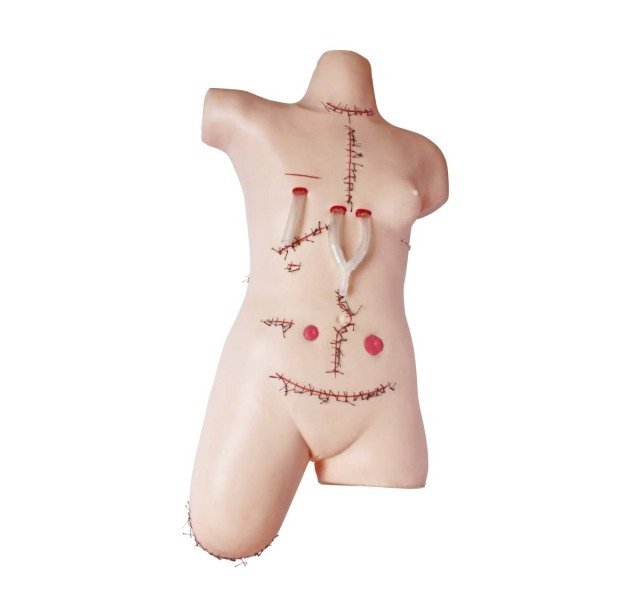
XC-471 Surgical Suture and Bandaging Model – Medical Wound Care Training Simulator
The XC-471 Surgical Suture and Bandaging Model is a medical education training aid developed to support the teaching of surgical suturing, wound dressing and bandaging-related skills. It provides a practical learning resource for students and healthcare trainees who want to develop familiarity with wound management techniques in a controlled training environment.
Wound care is an essential part of medical and nursing education. Healthcare professionals need to understand how to assess wounds, select suitable care procedures, apply dressings and use appropriate bandaging techniques. Suturing is another important clinical skill that requires careful instrument handling, controlled hand movements and an understanding of wound closure principles.
The XC-471 model can be considered for use in nursing colleges, medical universities, healthcare training centres, hospital-based education departments and clinical skills laboratories. Exact model features, wound types, anatomical design and included accessories should be confirmed using the manufacturer’s official specifications.
Surgical Suture Training Surgical Suture and Bandaging Model
Suturing is an important skill in surgical and clinical education. Students require proper instruction in suture materials, needle handling, instrument control and wound closure principles.
The XC-471 Surgical Suture and Bandaging Model can support instructor-led suturing demonstrations and supervised practice activities, according to the model’s intended functions.
Students can learn about different suturing concepts, understand the importance of accurate hand movements and become familiar with the general steps involved in wound closure.
Practical class-e instructor-er guidance follow kore students suturing-related skills practise korte pare and feedback-er maddhome nijeder technique improve korar opportunity pay.
Wound Care and Dressing Education Surgical Suture and Bandaging Model
Wound care involves the assessment, cleaning, dressing and monitoring of wounds according to clinical guidelines. Nursing and medical students need to understand the importance of appropriate wound management and infection prevention.
The XC-471 model can be incorporated into wound-care lessons to support demonstrations about dressing application, wound protection and general care principles.
It can complement lessons covering:
-
Basic wound assessment
-
Dressing application principles
-
Wound protection
-
Infection prevention
-
Bandage selection concepts
-
Patient comfort and safety
These activities help students understand the role of proper wound care in healthcare settings.
Bandaging Practice for Nursing Students Surgical Suture and Bandaging Model
Bandaging is a fundamental nursing skill used in wound management, support and protection. Students need to understand appropriate bandage application, positioning, secure wrapping and circulation-related safety considerations.
The XC-471 Surgical Suture and Bandaging Model can support educational demonstrations on bandaging principles and supervised practice where appropriate to its design.
Nursing instructors can demonstrate bandaging techniques and explain the importance of maintaining suitable tension, avoiding unnecessary pressure and observing patient comfort.
Bangladesh-er Diploma in Nursing and BSc in Nursing students-der practical education-e wound dressing and bandaging training important. This model can complement their clinical skills lessons and instructor-led practice.
Practical Medical Skills Development Surgical Suture and Bandaging Model
The XC-471 model provides an educational resource for connecting theoretical lessons with practical demonstrations. Students can become more familiar with wound management procedures, suturing concepts and bandaging principles.
Instructors can organize step-by-step demonstrations, followed by supervised practice sessions. Learners can receive feedback on their technique, identify areas that need improvement and strengthen their understanding of clinical procedures.
Regular practice within the model’s intended use may help students improve procedural familiarity and confidence in the training environment.
Supports Clinical Skills Laboratories Surgical Suture and Bandaging Model
Clinical skills laboratories allow medical and nursing students to practise procedures in a structured environment before participating in supervised patient care.
The XC-471 Surgical Suture and Bandaging Model can be considered for clinical simulation facilities that teach wound closure, dressing and bandaging.
It may complement other medical training equipment, including:
-
Advanced suture practice arms
-
Suture practice legs
-
Wound-care training models
-
Injection training pads
-
IV training arms
-
CPR and patient-care simulators
Institutions can use these training resources to organize different practical learning stations within their clinical skills laboratories.
Instructor-Led Demonstrations Surgical Suture and Bandaging Model
The XC-471 model can support practical demonstrations led by qualified medical educators, nursing instructors and clinical skills trainers.
An instructor can introduce the objectives of a training session, explain the relevant wound-care and suturing principles and demonstrate the procedures supported by the model.
Students can observe the demonstration and participate in supervised exercises. Instructors can provide guidance on equipment handling, technique and safety precautions.
This teaching approach helps learners connect classroom concepts with practical clinical education.
Wound Closure and Suturing Concepts
Wound closure requires an understanding of tissue handling, wound characteristics and appropriate clinical procedures. Suturing education introduces students to the principles of bringing wound edges together and maintaining appropriate closure according to the procedure being taught.
The XC-471 model can provide a training context for explaining these concepts. Instructors can discuss different suturing methods and the importance of selecting an appropriate technique according to clinical guidance.
The model should only be used for the procedures it is designed to support, and learners must receive appropriate supervision.
Infection Prevention and Patient Safety
Infection prevention is a key part of wound care and surgical training. Students need to understand hand hygiene, clean working practices, appropriate protective equipment, instrument handling and safe disposal of sharps.
The XC-471 Surgical Suture and Bandaging Model can complement lessons about these important safety principles.
During practical sessions, instructors can emphasize the importance of following institutional protocols, maintaining a suitable training environment and using appropriate precautions when practising with suturing instruments.
Simulation training supports learning but does not replace formal clinical competency assessment or supervised experience.
Suitable for Medical Colleges and Nursing Institutes
The XC-471 Surgical Suture and Bandaging Model can be considered for a variety of medical and healthcare education settings, including:
-
Government and private medical colleges
-
Nursing colleges and institutes
-
Medical universities
-
Hospital training departments
-
Clinical skills laboratories
-
Surgical skills training centres
-
Healthcare vocational training institutes
-
Medical simulation centres
-
Professional nursing training facilities
For institutions in Bangladesh, this model may be included in procurement plans for practical wound-care and surgical skills education, depending on its verified features and the institution’s curriculum.
Supports Repeated Practical Learning
Practical training often requires repeated demonstrations and supervised exercises. The XC-471 model can provide a dedicated educational resource for revisiting suturing and bandaging concepts according to its construction and manufacturer’s instructions.
Repeated practice allows students to review techniques, develop familiarity with training instruments and receive further guidance from instructors.
Institutions should verify whether the model supports repeated suturing, whether any parts are replaceable and what maintenance is required before using it for frequent practice.
Useful for Healthcare Training in Bangladesh
Medical and nursing education in Bangladesh involves both theoretical knowledge and practical skills development. Suitable training equipment can help institutions provide structured demonstrations and hands-on learning opportunities.
The XC-471 Surgical Suture and Bandaging Model can be considered by medical colleges, nursing institutes, hospitals and healthcare training centres looking for educational resources related to wound care and bandaging.
Alo Scientific supplies medical training models, laboratory equipment and educational products for institutions and healthcare professionals in Bangladesh. Buyers can contact Alo Scientific for product details, availability, pricing and quotations.
9. Key Features of XC-471 Surgical Suture and Bandaging Model
-
Surgical Suturing Education: Supports learning about suturing techniques and wound closure.
-
Bandaging Practice: Designed to support bandaging-related educational activities.
-
Wound Care Training: Helps demonstrate basic wound dressing and wound management concepts.
-
Practical Learning: Supports hands-on demonstrations and supervised exercises.
-
Clinical Skills Development: Can be incorporated into medical and nursing practical lessons.
-
Instructor-Led Training: Suitable for demonstrations and guided practice.
-
Medical Simulation: Can complement clinical skills laboratories and healthcare training centres.
10. Product Specifications Surgical Suture and Bandaging Model
|
Specification |
Details |
|---|---|
|
Product Name |
Surgical Suture and Bandaging Model |
|
Model Number |
XC-471 |
|
Product Category |
Medical Training Simulator |
|
Training Type |
Suturing and Bandaging |
|
Application |
Wound Care and Surgical Skills Education |
|
Main Users |
Medical Students, Nursing Students, Healthcare Trainees |
|
Training Environment |
Medical Colleges, Nursing Institutes, Hospitals |
|
Learning Method |
Practical Demonstration and Supervised Practice |
|
Material |
Confirm with manufacturer |
|
Dimensions |
Confirm with manufacturer |
|
Weight |
Confirm with manufacturer |
|
Colour |
Confirm with manufacturer |
|
Wound Types |
Confirm with manufacturer |
|
Replaceable Parts |
Confirm with manufacturer |
|
Accessories |
Confirm with supplier |
|
Maintenance |
As per manufacturer’s instructions |
|
Brand |
As supplied |
|
Availability |
Contact Alo Scientific |
Note: Exact dimensions, materials, wound types, replaceable parts and included accessories should be verified with the manufacturer before publishing.
11. Benefits of XC-471 Surgical Suture and Bandaging Model
Practical Medical Education
Supports hands-on learning of suturing, wound care and bandaging principles.
Clinical Skills Development
Helps learners become familiar with instrument handling, dressing application and bandaging techniques.
Structured Learning
Connects theoretical knowledge with instructor-led practical demonstrations.
Supervised Practice
Allows instructors to guide students, observe techniques and provide feedback.
Patient Safety Awareness
Complements education about infection prevention, wound protection and safe instrument handling.
12. Applications Surgical Suture and Bandaging Model
The XC-471 Surgical Suture and Bandaging Model can be considered for:
-
Surgical suturing practice
-
Wound dressing demonstrations
-
Bandaging technique education
-
Nursing practical training
-
Medical student skills development
-
Wound-care education
-
Clinical skills laboratory sessions
-
Healthcare simulation programmes
-
Instructor-led surgical training
13. How to Use the XC-471 Surgical Suture and Bandaging Model
-
Prepare the training area: Place the model on a clean and stable surface.
-
Arrange training materials: Prepare suitable training sutures, bandages and other required equipment according to the instructor’s guidance.
-
Demonstrate the procedure: The instructor explains relevant suturing, dressing or bandaging principles.
-
Conduct supervised practice: Students practise the techniques supported by the model under qualified supervision.
-
Evaluate performance: The instructor reviews technique, hand coordination, equipment handling and safety awareness.
-
Clean and store: Follow the manufacturer’s recommended cleaning, maintenance and storage procedures.
14. Frequently Asked Questions (FAQ) Surgical Suture and Bandaging Model
1. What is the XC-471 Surgical Suture and Bandaging Model?
The XC-471 is a medical training model intended to support practical education in surgical suturing, wound care and bandaging techniques.
2. Who can use the XC-471 model?
It is intended for medical students, nursing students, healthcare trainees, clinical instructors and medical educators.
3. What is the main purpose of the XC-471?
The model is intended to help learners understand suturing, wound dressing and bandaging principles through practical demonstrations and supervised exercises.
4. Is the XC-471 suitable for nursing colleges?
Yes, it can be considered for nursing colleges, medical institutes and clinical skills laboratories, subject to its verified training functions.
5. Can the XC-471 be used for suturing practice?
The product is identified as a surgical suture training model. Confirm its specific suturing capabilities and supported techniques with the manufacturer.
6. Can students practise bandaging with this model?
The model is identified for both suturing and bandaging education. Specific supported bandaging exercises should be confirmed with the supplier.
7. Is the XC-471 suitable for medical simulation laboratories?
It can be considered for clinical skills and medical simulation laboratories that provide wound-care and suturing education.
8. Does the XC-471 come with suturing instruments and bandages?
Included accessories should be confirmed with the supplier before ordering.
9. Does the XC-471 replace clinical training?
No. It is an educational aid and does not replace supervised patient care, formal clinical assessment or professional training.
10. Where can I buy the XC-471 Surgical Suture and Bandaging Model in Bangladesh?
You can contact Alo Scientific through aloscientific.com for product availability, updated pricing, specifications and delivery information.
15. Why Choose Alo Scientific?
Alo Scientific supplies medical training models, laboratory equipment and educational products for healthcare institutions and professional users in Bangladesh.
Customers can contact Alo Scientific for:
-
XC-471 product availability
-
Product specifications and quotations
-
Medical and nursing training equipment
-
Institutional procurement enquiries
-
Related surgical and wound-care models
-
Delivery options across Bangladesh
Visit aloscientific.com for product details and purchase enquiries.
16. Conclusion
The XC-471 Surgical Suture and Bandaging Model is a medical training simulator intended to support practical education in suturing, wound care and bandaging. It can be considered for medical colleges, nursing institutes, hospitals and clinical skills laboratories that provide structured healthcare training.
Through instructor-led demonstrations and supervised practice, students can develop familiarity with wound closure concepts, dressing application, bandaging techniques and essential patient safety principles. The model can complement theoretical instruction and simulation-based medical education.
Contact Alo Scientific through aloscientific.com for updated pricing, product specifications and availability of the XC-471 Surgical Suture and Bandaging Model in Bangladesh.
Reviews
There are no reviews yet.