
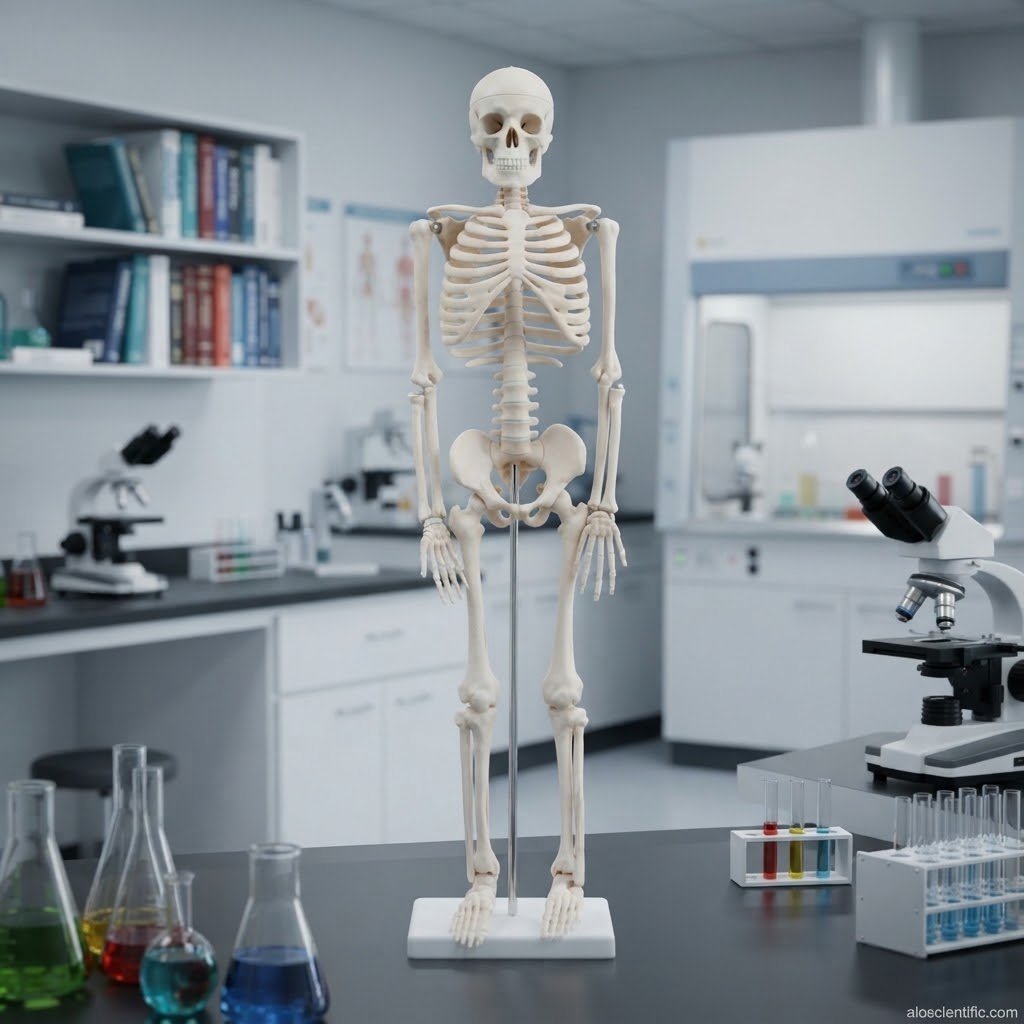
XC-102 85cm Skeleton Model – Compact Human Anatomy Teaching Aid
Human skeletal anatomy is a fundamental subject for medical, nursing, physiotherapy and healthcare students. Students need to understand the arrangement of bones and their relationship with different parts of the body before progressing to more advanced subjects.
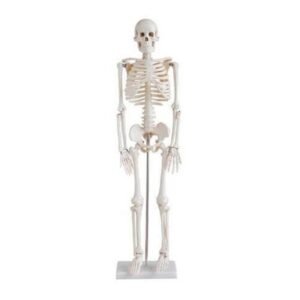
The XC-102 85cm Skeleton Model has been designed as a practical three-dimensional teaching aid for this purpose. With an approximate height of 85cm, the model offers a clear overall representation of the human skeletal structure while maintaining a compact footprint.
A smaller anatomical model can be especially useful when classroom space, laboratory space or storage space is limited. Teachers can easily position the model on a demonstration table and use it during lectures or practical sessions.
Compact 85cm Design
The main advantage of the 85cm Human Skeleton Model is its convenient size. Compared with life-size skeletons, an 85cm model requires less display space and can be easier to handle during classroom demonstrations.
Teachers can place the model on a table, laboratory bench or educational display area. Students can observe the model from different angles and develop a better understanding of the three-dimensional relationship between different skeletal regions.
This makes the model suitable for both individual study and group teaching.
Three-Dimensional Skeletal Learning
Textbooks and diagrams are important for anatomy education, but a three-dimensional model provides another level of visual understanding. Students can observe the skeletal system as a complete structure rather than studying individual bones only through two-dimensional images.
The 85cm Skeleton Model can be used to introduce the general organisation of the human skeleton and help students understand anatomical orientation.
Teachers can point to different regions while explaining their location and relationship to the rest of the body. This practical approach can make introductory anatomy lessons more engaging.
Skull Anatomy
The skull is one of the most important parts of the human skeleton. It protects the brain and forms the structural framework of the head.
Using the XC-102, teachers can introduce the skull as part of the complete skeletal system and explain its position relative to the vertebral column.
For beginners, studying the skull within a complete skeleton can help create a better understanding of the overall body structure.
Vertebral Column
The vertebral column forms the central structural axis of the human body. It is an essential subject in anatomy, nursing, physiotherapy and rehabilitation education.
The 85cm Skeleton Model allows teachers to demonstrate the position of the spinal column within the complete skeleton. Students can observe the relationship between the spine, skull, rib cage and pelvis.
This can support introductory discussions about posture, body structure and basic musculoskeletal anatomy.
Rib Cage Demonstration
The rib cage is another important region that can be demonstrated with the XC-102. Students can observe the location of the ribs around the thoracic region and understand their relationship with the vertebral column.
Teachers can use the model during basic anatomy classes to explain the general structure of the chest and the protective role of the skeletal framework.
Upper Limb Anatomy
The upper limbs are important for understanding basic human movement and musculoskeletal structure. The Mini Skeleton Anatomy Model provides a convenient visual reference for demonstrating the position of the upper limbs in relation to the torso.
Students can study the general arrangement of the shoulder region, arms and hands while learning basic anatomical terminology.
This makes the model useful for introductory anatomy and nursing education.
Pelvis and Lower Limb
The pelvis connects the axial skeleton with the lower limbs and is an important region for anatomical study.
Teachers can use the XC-102 to demonstrate the general position of the pelvis and explain how it relates to the vertebral column and lower limbs.
The model can also support introductory teaching about the arrangement of the legs and feet within the overall skeletal system.
Useful for Medical Students
Medical students require a strong foundation in anatomy before moving into clinical subjects. A physical Anatomical Skeleton Model can be useful during early anatomy courses because it gives students a permanent three-dimensional reference.
The XC-102 can be placed in an anatomy laboratory, classroom or study area where students can refer to it during lessons and independent study.
It can complement anatomy textbooks, posters, charts, digital resources and other educational models.
Suitable for Nursing Institutes
Nursing students also require knowledge of basic skeletal anatomy. Understanding the location of bones and major skeletal regions is useful in many areas of nursing education.
The XC-102 can be used during classroom sessions to introduce skeletal terminology and anatomical landmarks.
Because the model is relatively compact, it can be convenient for nursing classrooms where several educational models may need to be displayed in the same area.
Physiotherapy and Rehabilitation Education
A good understanding of bones and joints is essential for students studying physiotherapy and rehabilitation. The skeleton provides the structural framework for movement, and students need to understand its basic organisation before studying muscles, joints and movement patterns in detail.
The Human Skeleton Model for Medical Training can serve as a visual teaching aid during introductory musculoskeletal education.
Teachers can use the model to discuss body alignment, skeletal regions and the relationship between bones and movement.
Classroom Demonstration
The XC-102 is suitable for classroom demonstrations where teachers need to explain skeletal structures to multiple students.
Instead of passing around small individual bone specimens or relying entirely on textbook diagrams, the teacher can use the model as a central visual reference.
The compact design also makes it easier to move from one classroom or laboratory station to another when required.
Practical Anatomy Learning
Practical learning is an important part of anatomy education. Students often understand anatomical concepts more effectively when they can connect theoretical information with a physical model.
The 85cm Skeleton Model can be used during practical classes, revision sessions, student presentations and anatomy demonstrations.
Students can identify different regions of the skeleton while listening to explanations from teachers or discussing the structures in groups.
Suitable for Educational Display
The XC-102 can also be used as a permanent educational display. It can be placed in anatomy laboratories, nursing classrooms, medical training centres, educational institutions or healthcare learning environments.
A visible skeleton model can encourage students to review skeletal anatomy even outside formal lecture sessions.
Its compact 85cm format makes it easier to display in areas where a 180cm life-size skeleton may not be practical.
Benefits of XC-102 85cm Skeleton Model
The 85cm Skeleton Model offers several practical advantages for anatomy education:
- Compact and convenient 85cm format
- Three-dimensional human skeletal representation
- Useful for anatomy teaching
- Suitable for medical and nursing education
- Helpful for physiotherapy training
- Suitable for classroom demonstrations
- Useful for practical anatomy sessions
- Easy to display in laboratories and classrooms
- Requires less space than a life-size skeleton
- Suitable for student presentations
- Useful as an educational reference model
- Supports visual and practical learning
Why Choose XC-102?
If an institution requires a compact skeleton model for teaching, the XC-102 provides a practical solution. Its approximately 85cm height offers a balance between visibility and space efficiency.
For schools, colleges, nursing institutes, medical training centres and anatomy laboratories, this model can be used as a regular teaching and demonstration aid.
The model can help students move from theoretical learning to practical visual understanding of the human skeletal system.
Specifications
| Specification | Details |
|---|---|
| Product Model | XC-102 |
| Product Name | 85cm Skeleton Model |
| Model Type | Human Anatomical Skeleton Model |
| Approx. Height | 85cm |
| Body Coverage | Full Human Skeleton |
| Main Application | Anatomy Education & Medical Training |
| Educational Purpose | Skeletal Anatomy Demonstration |
| Model Category | Anatomical Skeleton Model |
| Suitable For | Medical Colleges, Nursing Institutes, Schools, Universities & Training Centres |
| Recommended Departments | Anatomy, Nursing, Physiotherapy, Healthcare Education |
| Teaching Method | Visual, Practical & Classroom Demonstration |
| Display Use | Classroom, Laboratory & Educational Display |
| Size Advantage | Compact compared with life-size skeleton models |
FAQ
1. What is the height of the XC-102 Skeleton Model?
The XC-102 85cm Skeleton Model has an approximate height of 85cm, making it a compact anatomical teaching model.
2. What is the main purpose of the XC-102?
It is designed for human skeletal anatomy education, classroom demonstrations, medical training and practical teaching.
3. Is the XC-102 suitable for medical students?
Yes. The model can be used as a visual reference for students studying basic human skeletal anatomy.
4. Can nursing institutes use this skeleton model?
Yes. Nursing teachers can use the 85cm Human Skeleton Model for classroom demonstrations and basic anatomy education.
5. Is it suitable for physiotherapy students?
Yes. The model can help physiotherapy students understand the general structure and arrangement of the human skeleton before studying advanced musculoskeletal concepts.
6. Why choose an 85cm skeleton instead of a 180cm skeleton?
The 85cm model is more compact and requires less display and storage space. It can be particularly useful for smaller classrooms, laboratories and demonstration tables.
7. Can this model be used for classroom teaching?
Yes. Teachers can use it as a visual aid during anatomy lectures, practical classes, presentations and revision sessions.
8. What can students learn from the model?
Students can study the overall arrangement of the human skeleton, including the skull, vertebral column, rib cage, pelvis, upper limbs and lower limbs.
9. Is this a useful anatomy laboratory model?
Yes. The Anatomical Skeleton Model can be used as a permanent or temporary teaching aid in anatomy laboratories and medical education facilities.
10. Who should use the XC-102?
It is suitable for medical students, nursing students, physiotherapy students, anatomy teachers, healthcare educators and institutions providing health science education.
11. Is the XC-102 suitable for educational display?
Yes. Its compact size makes it suitable for classroom, laboratory and educational display purposes.
12. Where can I buy XC-102 85cm Skeleton Model in Bangladesh?
You can contact Alo Scientific for current availability, pricing and delivery information in Bangladesh.

Reviews
There are no reviews yet.